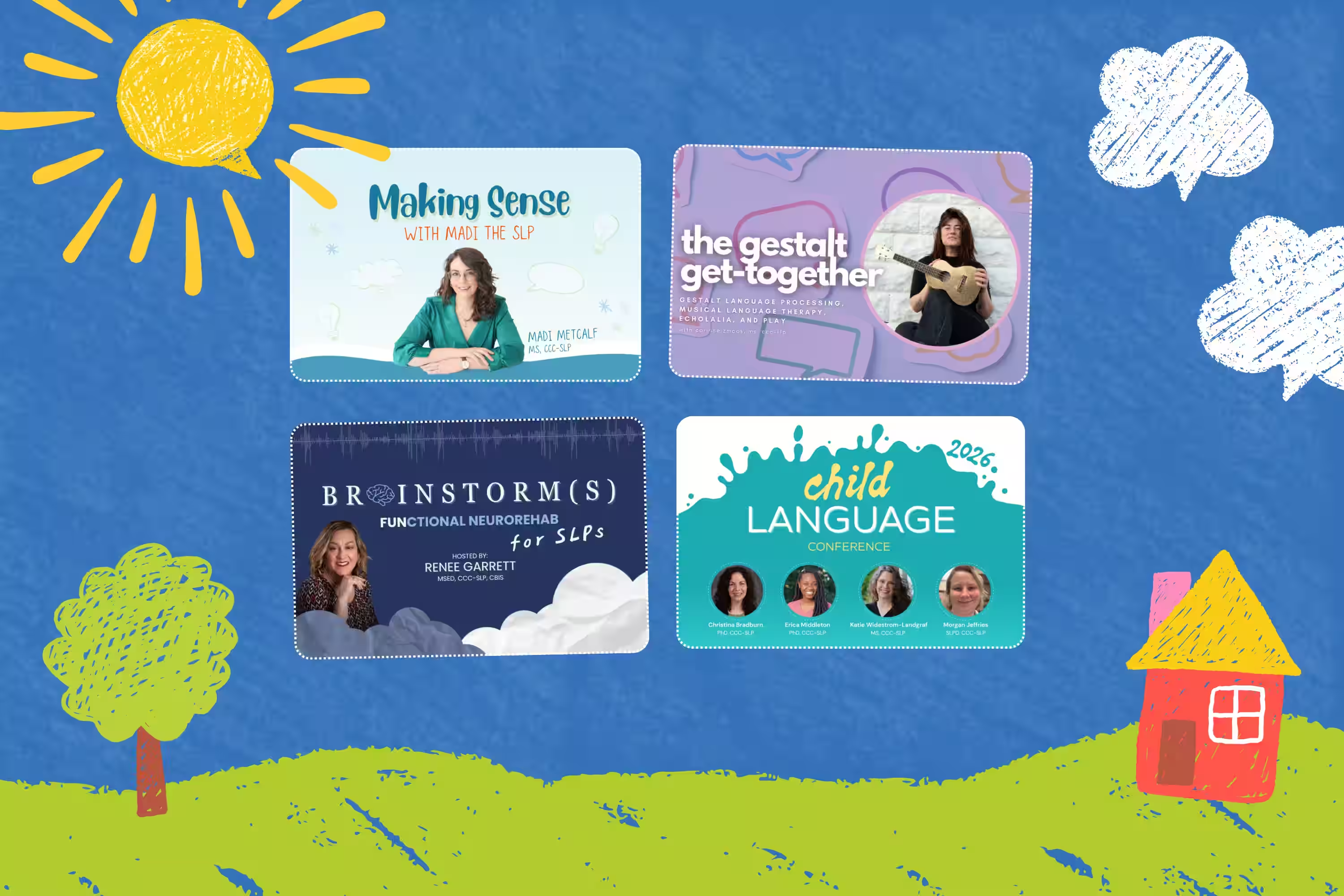
Welcome to your January Continuing Education Lineup!
As we step into a new year, many clinicians find themselves reflecting on both their work and their purpose. January’s continuing education lineup offers space to learn, recalibrate, and reconnect with the why behind what you do. With courses led by experienced voices across the field, this month invites intentional growth that carries forward all year long.
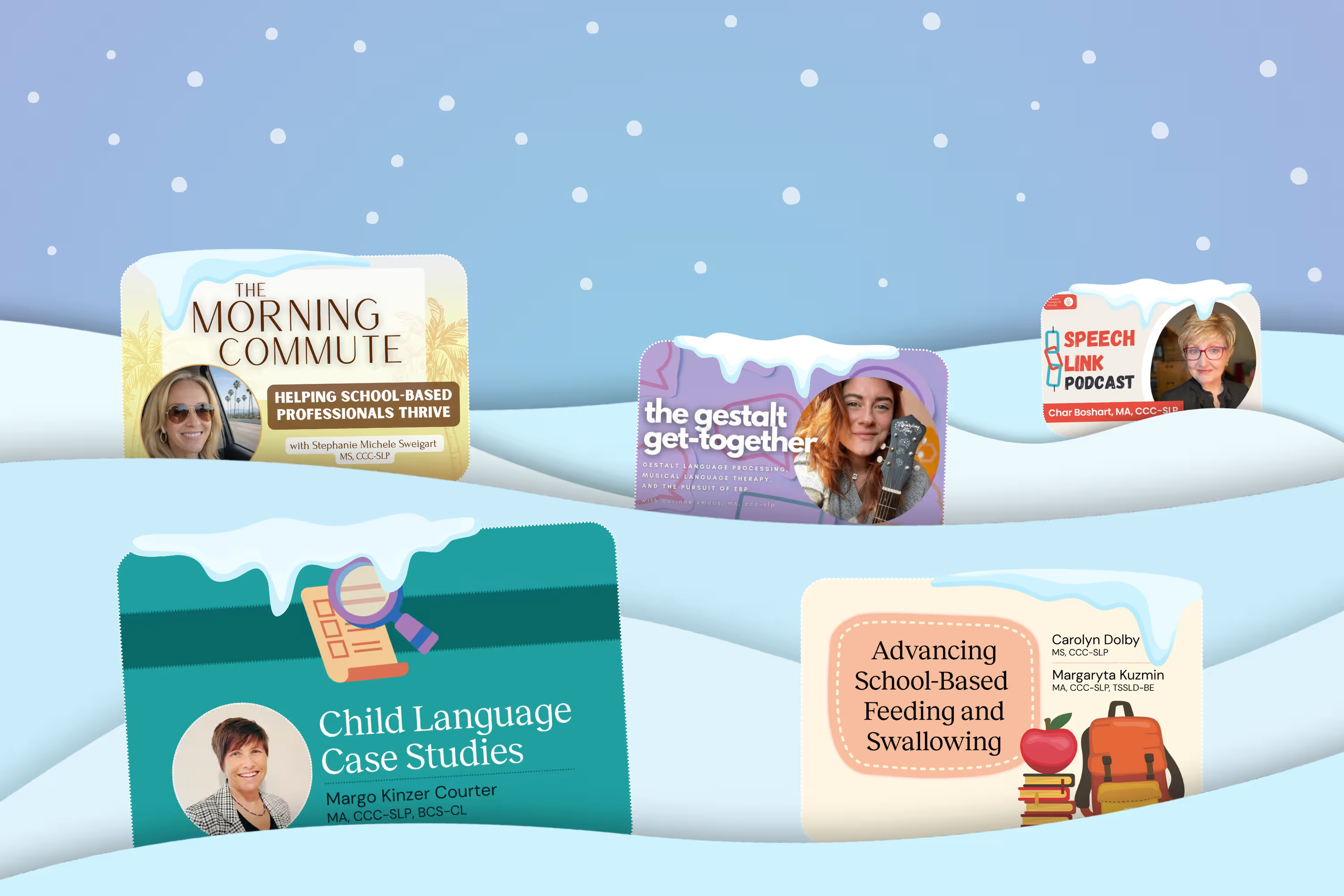
This month, we’re offering over 14 Courses, more than 17 PD hours and many Live and Interactive ASHA CEUs. This includes sessions like Advancing School-Based Feeding and Swallowing: An Intervention Masterclass, which takes a systems-based approach to safe, functional feeding in schools, and Let’s Be Real: Communication Skills for School Collaboration, focused on practical, values-aligned communication strategies for navigating school-based conversations. Whether you’re looking to deepen expertise in a specialty area or strengthen everyday clinical skills, there’s something here for every clinician.
Don’t forget that Speech Therapy PD hosts the largest collection of on-demand CE courses available online, with new offerings added all the time. If January’s schedule isn’t quite what you need, our full library has something for every interest and specialty.
Full Course Lineup
Corinne Zmoos, MS, CCC-SLP, Amy Zembriski, MS, CCC-SLP | Live and Interactive (0.10 ASHA CEU)
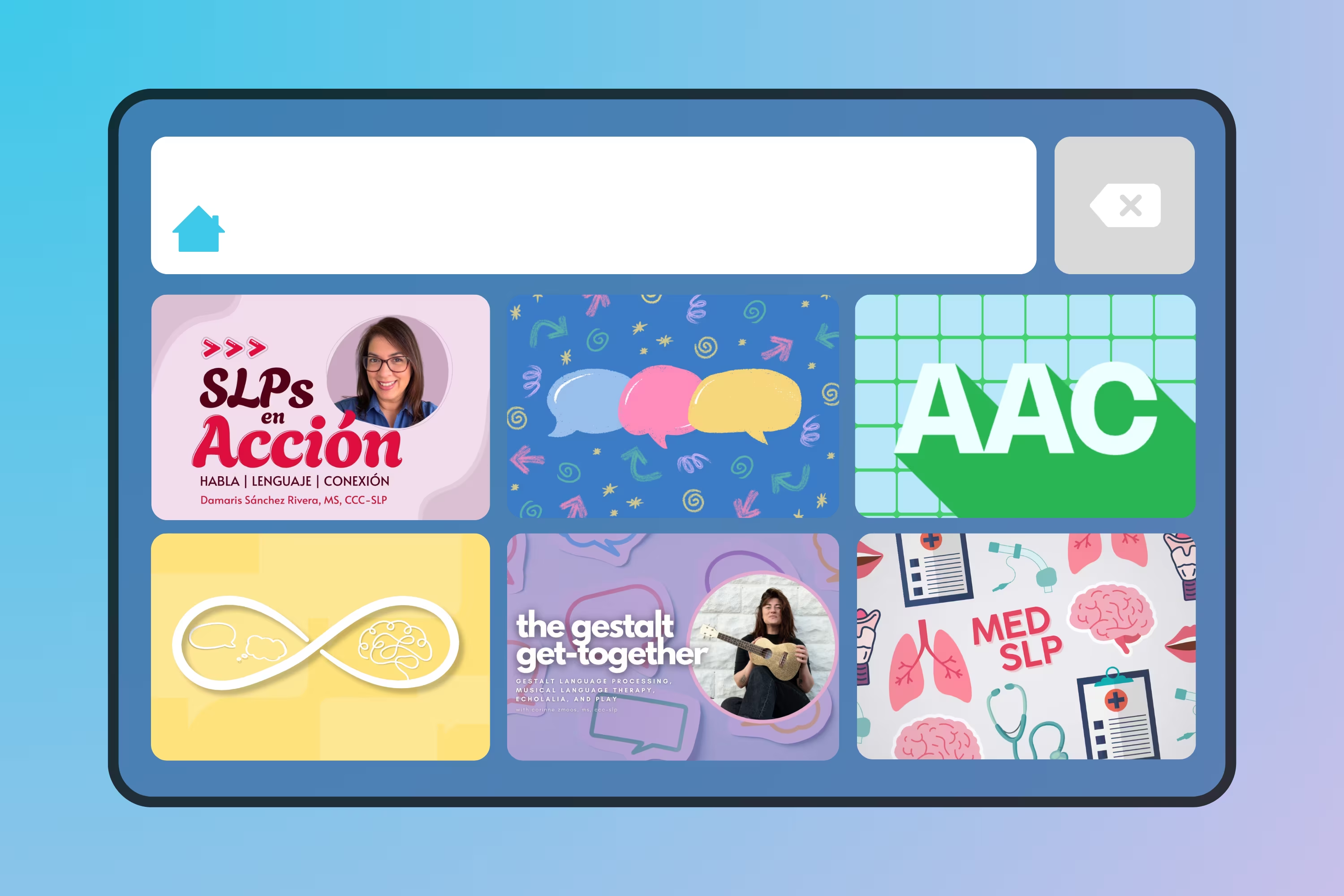
This conversation explores how executive function, perception, attention, and non-verbal working memory influence language access for Gestalt Language Processors. It highlights how perceptual challenges can underlie what may appear as receptive language delays or behavioral concerns. Listeners will leave with practical, neurodiversity-affirming strategies that go beyond modeling to support GLPs who feel “stuck” in their language development.
Michele Sweigart, MS, CCC-SLP | On Demand (0.05 ASHA CEU)
This episode explores a grounded, realistic approach to communication for school-based educators who want more clarity and confidence without people-pleasing or shutting down. It offers practical tools for navigating IEP meetings, team dynamics, and parent conversations with empathy, clear requests, and healthy boundaries. Listeners will walk away with strategies to make school collaboration feel calmer, more honest, and more sustainable.
Char Boshart, MA, CCC-SLP, Tricia H. Rogers, MS, CCC-SLP | Live and Interactive (0.10 ASHA CEU)
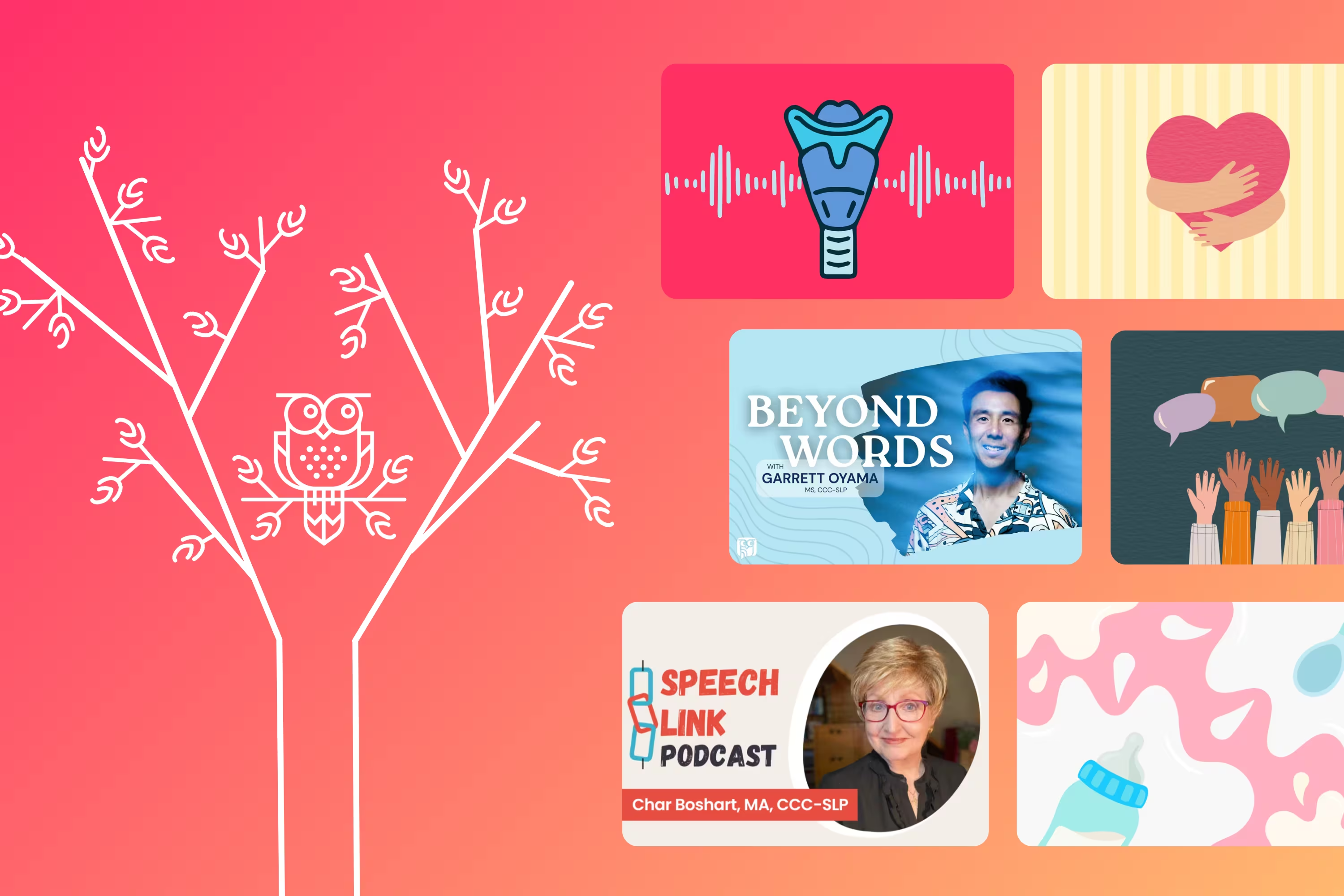
This episode explores oral resting posture (ORP) and why it is often a missing piece in supporting speech sound production and carryover for preschool and school-age children. It defines what effective and ineffective ORPs look like and explains how oral posture supports stability and efficient movement for speech. Listeners will gain practical, developmentally appropriate strategies to build self-monitoring, endurance, and carryover beyond the therapy setting.
Corinne Zmoos, MS, CCC-SLP, joined by Janine Benner, MA, CCC-SLP, BCS-CL, ASCS | On Demand (0.10 ASHA CEU)
In this episode, learn how to collect meaningful data and write goals that accurately reflect how gestalt language processors communicate, without disrupting connection or flow during sessions. It examines why traditional documentation can interfere with rapport and offers alternative approaches that move beyond accuracy-based metrics. Listeners will gain practical frameworks for goal writing, data collection, and recognizing early progress in ways that support both accountability and neurodiversity-affirming practice.
Carolyn Dolby, MS, CCC-SLP, and Margaryta Kuzmin, MA, CCC-SLP, TSSLD-BE | Live and Interactive (0.40 ASHA CEU)
This advanced course offers a practical, systems-based framework for delivering pediatric feeding and swallowing services in school settings while balancing safety, participation, and educational relevance. It covers identifying Pediatric Feeding and Swallowing Disorder, determining when to assess, intervene, or refer, and applying culturally responsive practices in collaboration with families. Through case-based learning, participants will develop interdisciplinary safe eating plans, staff training systems, and evidence-informed interventions that support functional outcomes and uphold students’ right to FAPE.
Renee Garrett, MSEd, CCC-SLP, CBIS, joined by Julie A. Fechter, MS, CCC-SLP | Live and On Demand (0.10 ASHA CEU)
Explore dysautonomia and its often-overlooked impact on attention, fatigue, communication tolerance, swallowing safety, and engagement in neuro rehabilitation. It is especially relevant for clinicians working with adults after stroke, TBI, long COVID, and other neurologic conditions, highlighting common red flags and assessment considerations. Listeners will gain practical strategies for adapting therapy to protect energy, support carryover, and respond more confidently to fluctuating patient presentation.
Beth Bergstrom, MS, CCC-SLP, and Trina Becker, MS, CCC-SLP | Live and On Demand (0.10 ASHA CEU)
This hands-on case discussion walks through a real pediatric example of executive dysfunction, guiding clinicians through reviewing assessment data to identify underlying factors driving a child’s challenges. The session focuses on building a clear profile of strengths, needs, and functional impact to establish meaningful treatment priorities. Participants will learn how to integrate client values, clinical judgment, and research to develop a personalized, functional intervention plan that supports lasting progress in executive function skills.
Margo Kinzer Courter, MA, CCC-SLP, BCS-CL | Live and Interactive (0.10 ASHA CEU)
This first episode of Child Language Case Studies introduces a young learner whose phonological and phonemic awareness challenges are impacting early literacy development, walking clinicians through assessment interpretation, target selection, and developmentally appropriate intervention planning. The case highlights how these foundational skills intersect with broader language development and underscores the importance of collaboration with educators to support classroom carryover. This monthly series will feature case studies across each language domain, with most episodes including both a younger and an older student to illustrate developmental differences in clinical decision making.
Garrett Oyama, MS, CCC-SLP, joined by Dr. Sam Wass, PhD | Live and Interactive (0.10 ASHA CEU)
This conversation explores how attention, regulation, and language development are dynamically shaped by caregiver interaction, stress, and moment-to-moment co-regulation in infants and young children. It highlights research on neural synchrony and shared attention to explain why early attention systems shift so quickly. Listeners will gain practical insights for creating more attuned, responsive intervention strategies that support language development in natural settings.
Renee Garrett, MSEd, CCC-SLP, CBIS and Melissa Brunner, PhD, MHlthSC, CPSP |
Live and Interactive (0.10 ASHA CEUs)
Social media can support connection and identity rebuilding after acquired brain injury when used thoughtfully and safely. It introduces the concept of SocialAbility and offers practical strategies to help clients navigate online spaces with greater confidence, boundaries, and self-awareness. Designed for SLPs, caregivers, and survivors, the conversation provides compassionate, real-world guidance for using social media as a meaningful bridge to social connection.
Stephanie Michele Sweigart, MS, CCC-SLP | On Demand (0.05 ASHA CEU)
In this on demand course, examine why conflict can feel uncomfortable in school settings and how predictable response patterns influence tense interactions. It introduces four common conflict styles and provides practical, customizable scripts to support clearer boundaries and calmer, more confident communication. Listeners will gain tools they can use right away to navigate challenging conversations with intention and authenticity.
Corinne Zmoos, MS, CCC-SLP and Samantha Miseta, MS, OTR/L | Live and Interactive (0.10 ASHA CEUs)
This episode explores how collaboration between occupational therapists and speech-language pathologists can strengthen support for gestalt language processors. It highlights the role of regulation as a foundation for skill development and shares practical ways to integrate GLP-informed strategies across disciplines. Listeners will leave with actionable ideas for building stronger OT–SLP partnerships that honor each child’s communication style and support confident access to their environment.
Carolyn Dolby, MS, CCC-SLP, and McKinney, MA, CCC-SLP | Live and Interactive (0.20 ASHA CEUs)
This episode focuses on what makes speech therapy effective and meaningful in high school settings, where priorities shift toward independence and post-secondary readiness. It explores how SLPs can support academic access, social communication, and real-world goals while navigating busy schedules and complex team dynamics. Listeners will gain practical, collaborative strategies for designing future-focused services that center student dignity and long-term outcomes.
Janine Benner, MA, CCC-SLP, BCS-CL, ASDCS | Live and Interactive (0.20 ASHA CEUs)
This course focuses on practical, flexible strategies for collecting data and writing goals that accurately reflect communication growth in child-led, naturalistic therapy. It introduces quantitative, qualitative, and hybrid data tools that move beyond accuracy-based measurement while preserving the relational flow of play-based sessions. Through case examples and ready-to-use resources, participants will learn how to document authentic progress in a clear, meaningful, and defensible way across settings.
Renee Garrett, MSEd, CCC-SLP, CBIS and Farwa Husain, MS, CCC-SLP | Live and Interactive (0.10 ASHA CEUs)
This episode explores echolalia in adulthood and how Natural Language Acquisition can support meaningful communication growth for adults with neurogenic language disorders. It reframes echolalia as a functional part of communication and demonstrates how NLA principles can be applied beyond pediatrics in adult neurorehabilitation settings. Listeners will gain practical, relationship-centered strategies for integrating naturalistic language modeling while addressing cognitive-communication goals.
Garrett Oyama, MS, CCC-SLP, and Renee Garrett, MSEd, CCC-SLP, CBIS
This episode explores how sound and music shape communication and brain health, highlighting listening as an active, dynamic process influenced by emotion, attention, movement, and sensory input. It connects neuroscience and clinical practice to examine how factors like noise exposure, hearing changes, concussion, and TBI impact communication. Listeners are invited to think more intentionally about listening demands and how sound can support or interfere with meaningful communication across the lifespan.
Margo Kinzer Courter, MA, CCC-SLP, BCS-CL | Live and Interactive (0.10 ASHA CEUs)
This second episode of Child Language Case Studies shifts the focus to an older learner, exploring how phonological and phonemic awareness challenges can persist into the upper elementary years and continue to impact literacy and academic performance. Through the case of a seventh grader, clinicians examine how these needs evolve over time and how intervention approaches can be adapted to address multisyllabic word reading and related language demands. The episode also emphasizes collaboration with educators and aligning therapy goals with academic expectations to support meaningful participation and long-term success.
If you don’t see what you need in our January lineup, you can always explore all upcoming courses or search our growing library of more than 1,400 on-demand courses—the largest online library of on-demand continuing education for SLPs and related professionals. Speech Therapy PD adds new courses every month, so you’ll always find fresh content to fit your interests, licensure, certifications, and schedule.
Please note: Course schedules, presenters, and details are subject to change due to unforeseen circumstances such as presenter illness or other scheduling conflicts. We will notify registered participants as soon as possible of any changes. For the most up-to-date information, please check our website.