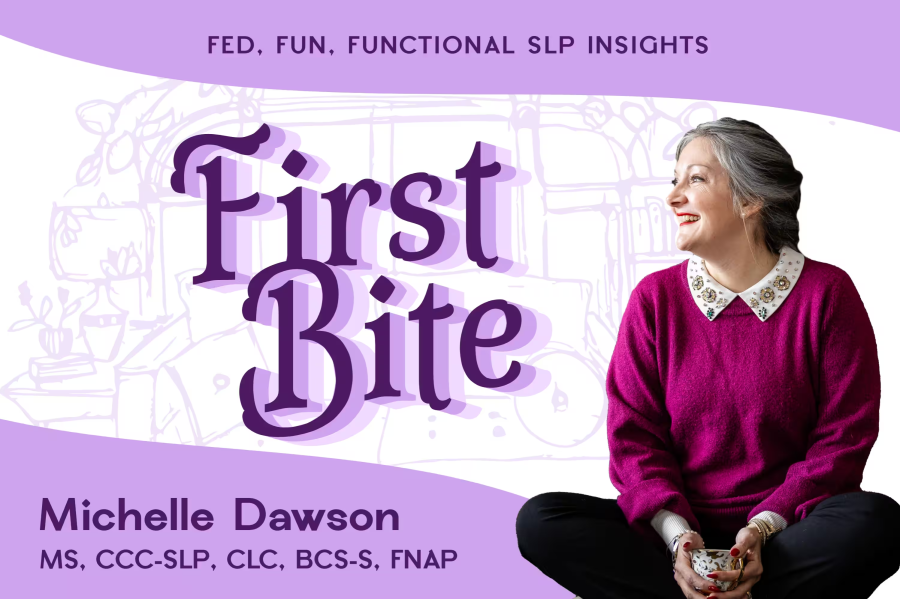





Kelly Kleinhans, PhD, CCC-SLP, and Courtney Richards, MS, CCC-SLP, CLC, join host Michelle Dawson, MS, CCC-SLP, CLC, BCS-S, FNAP on this episode of the First Bite podcast to unpack how mind maps and case-based learning can strengthen emerging clinical decision-making for Pediatric Feeding Disorder (PFD).
Building on their article, Bridging Pedagogy and Practice: Case-Based Learning and Mind Maps, they share how these strategies are used in graduate training to help learners organize complex information, recognize patterns, and connect assessment findings to meaningful intervention planning.
You’ll explore how mind maps and case-based learning can support diverse learning styles, including neurodivergent learners, while also strengthening supervision and mentoring conversations.
You’ll walk away with practical ways to use these tools to help students make sense of complex PFD cases and translate knowledge into confident, thoughtful clinical decisions.
Building on their article, Bridging Pedagogy and Practice: Case-Based Learning and Mind Maps, they share how these strategies are used in graduate training to help learners organize complex information, recognize patterns, and connect assessment findings to meaningful intervention planning.
You’ll explore how mind maps and case-based learning can support diverse learning styles, including neurodivergent learners, while also strengthening supervision and mentoring conversations.
You’ll walk away with practical ways to use these tools to help students make sense of complex PFD cases and translate knowledge into confident, thoughtful clinical decisions.
Show more
Less